

[June Edition] The Creative Companion
Stories, strategies, and soul-care for the creative journey

👋 Hello, friend
Welcome to The Creative Companion, a monthly newsletter for writers, creatives, and curious souls navigating the beautiful mess of writing and real life. Each issue offers:
Updates from my creative journey (and the chaos alongside it)
Practical writing tips, prompts, and tools
Mindfulness and mental health insights rooted in real-life experience
Book recommendations with lessons for writers
Think of it as a warm cup of tea, a gentle nudge, and a creative check-in. Delivered monthly.
June was a mixed month for me. It began on a high, with the making of a big decision that filled me with a sense of peace and clarity of purpose (which you can read about in my most recent essay). But soon after, I was hit by a summer cold which forced me to slow down, pause my writing, and cancel plans I was very much looking forward to. I hated it. But I knew that if I didn’t allow myself the time to rest properly, the illness would linger for twice as long.
So, I took the time to rest, I recovered, and then I came back with a bang. I set myself a goal of writing 5,000 words of my novel in a week. I made myself accountable by sharing that goal with a friend and on my Instagram, and I smashed it. I also powered through a list of chores and other life admin, exercised regularly, and applied for some part-time jobs. I was continuously busy from 8 am to 6 pm every day that week, and I felt amazing because I was hitting my goals and fulfilling my purpose.
And then… a second illness. I was hit by a stomach bug that completely floored me for over a week. As I lay on the sofa day after day, unable to do anything other than passively watch old episodes of Gossip Girl, self-critical thoughts played on a loop in my mind. Thoughts like:
This is because you pushed yourself too hard.
You should be recovered by now.
Who gets ill twice in one month? This is ridiculous.
The overall message of my mind was clear: this was my fault, a result of my actions or inactions.
It’s a common thought pattern of mine, and something I battled with particularly during our fertility journey. Every setback, every failure, was in some way a failure of mine.
Except that it wasn’t. It was bad luck. It was circumstances beyond my control. Just like getting two different illnesses in a month. And even if there were things I could have done differently, either to improve my conception chances or to protect myself from illness, the fact is that I didn’t, but I was doing the best that I could with the resources I had available to me at the time.
We (and I believe I’m talking primarily to women here) need to stop blaming ourselves when life deals us a shitty hand. We’re doing our best, and (99% of the time) it’s really not our fault.
💬 Let’s connect:
Have you ever blamed yourself for something that was outside of your control? How did you learn to let go of that self-blame — or are you still learning, like me?
✍️ From the Writing Desk
After taking a break to enter some short story competitions, I’m back to focusing on the first draft of my debut novel, a YA Norse mythology retelling. I’ve spent a long time in the idea, planning, and researching phases for this novel. I’ve changed my mind about the direction of the story twice, and written and discarded over 10,000 words in the process. Finally, with the help of the Save the Cat! beat sheet, I’m happy with the overall direction of the story, and I’m challenging myself to write this first draft without editing as I go. This means no reading over what I’ve written and allowing myself to write badly for the sake of getting the words down.
I’m doing this to loosen the grip of my perfectionism, which can often cause paralysis and procrastination in my writing process. I am accepting that my first draft will be awful. It will be full of mistakes, poorly written sentences, and inconsistencies, and many scenes and chapters will need to be cut or completely rewritten in the next draft. This is okay. This is part of the process. The magic happens in the redraft – I have learned this through my recent short stories. It’s more intimidating to think this way about a novel because the scale of it is so much bigger. But hey, if it were easy, everyone would do it, right?
Another update I’m excited to share is that I’ve enrolled in this year’s Mslexia Novel School, which starts on 7th of July. The school promises an intensive week for ‘creating and shaping your novel’ with expert guidance and tuition. Watch this space as I’ll be sharing the most helpful lessons I’ve learned at the end of the course.
💬 Let’s connect:
What’s your biggest hurdle when it comes to writing regularly — and what’s helped you get past it?
🛠️ Craft Corner
This Month’s Tip: Meeting your writing goals
Here’s what’s been helping me get the words down and smash my goals in this first drafting phase:
Accountability: Set yourself a weekly word count target, and share it with others. Either find an accountability buddy, or share it publicly on Notes or Instagram if you use it. Having external accountability adds a powerful extra layer of motivation to regular goal setting. For an extra boost, you could even plan a treat for yourself for when you meet your goal(s).
Leaving gaps and notes: Feeling stuck on a word, a description, a bit of dialogue, or even a fundamental character trait? Don’t let it stop your flow; make a note for Future You to fill in the gaps. I’ve been alternating between placeholders such as ‘xxx’ and ‘INSERT DESCRIPTION HERE’ and leaving myself detailed notes off-script. Working in Scrivener is helpful for this as you can view your notes side by side with your manuscript as you write.
Writers’ hours: I now attend two virtual writers’ hours, at the same time each day, with the London Writers’ Salon, and treat the hours as non-negotiable work meetings. This has imbued my practice with a sense of discipline and importance that perhaps was missing before. Whether you join a hosted writing hour or not, I would highly recommend choosing a set time to write each day. Treat it as a work meeting that you need a genuine reason to cancel, and I promise it will do wonders for your drafting practice.
🔗 Resources:
London Writers’ Salon: They have a tiered membership, and you can join at their lowest tier for free to get access to their daily online writers’ hours.
Scrivener: This platform lets you view your manuscript next to your research notes, character profiles, and anything else you might find useful. You can also easily navigate between chapters and scenes.
💬 Let’s connect:
Do you have a favourite writing craft book or tool that’s made a big difference to your process? I’m always looking to add to my writer’s toolbox!
🌿 The Mindful Moment
This month’s focus: Daily gratitude
Gratitude has become almost a wellness cliché, and the suggestion might induce an eye roll if you’re going through a tough time or just feeling generally fed up right now. But, if that’s the case, you’ll find gratitude more helpful than ever, and however bad things feel, there are always things to be grateful for. As a real-life example, I spent most of last week lying on my sofa with no appetite or energy, suffering from an illness that didn’t seem to be shifting or improving day by day. I felt very sorry for myself, but I still took a moment to note three things I was grateful for at the end of each day. They were always the same:
My husband, Sam, who worked from home all week so he could look after me.
My dog, Loki, who snuggled up on the blanket next to me.
My safe, cosy home which provided me with the space and comfort I needed to recover.
These are simple things, and it would be easy to take them for granted. But at the same time, they’re everything, and I’m so lucky to have them. Practicing daily gratitude helps me to remember that. It moves my focus away from the things I don’t have yet, or the things that have gone wrong, back to the wonderful things I already have in my life, and everything that has gone right.
📝 Journal Prompts:
What are three things, big or small, that you’re grateful for today?
Try to be as specific as possible. Notice the little moments that brought you comfort or joy.Who or what made your day a little easier or brighter recently?
Write them a short note of thanks (you don’t need to send it!)When life feels tough, what constants or comforts can you lean on?
Reflect on the people, places, or practices that ground you.
📚 The Writers’ Bookshelf
This month’s pick: The Mirror Crack’d from Side to Side by Agatha Christie
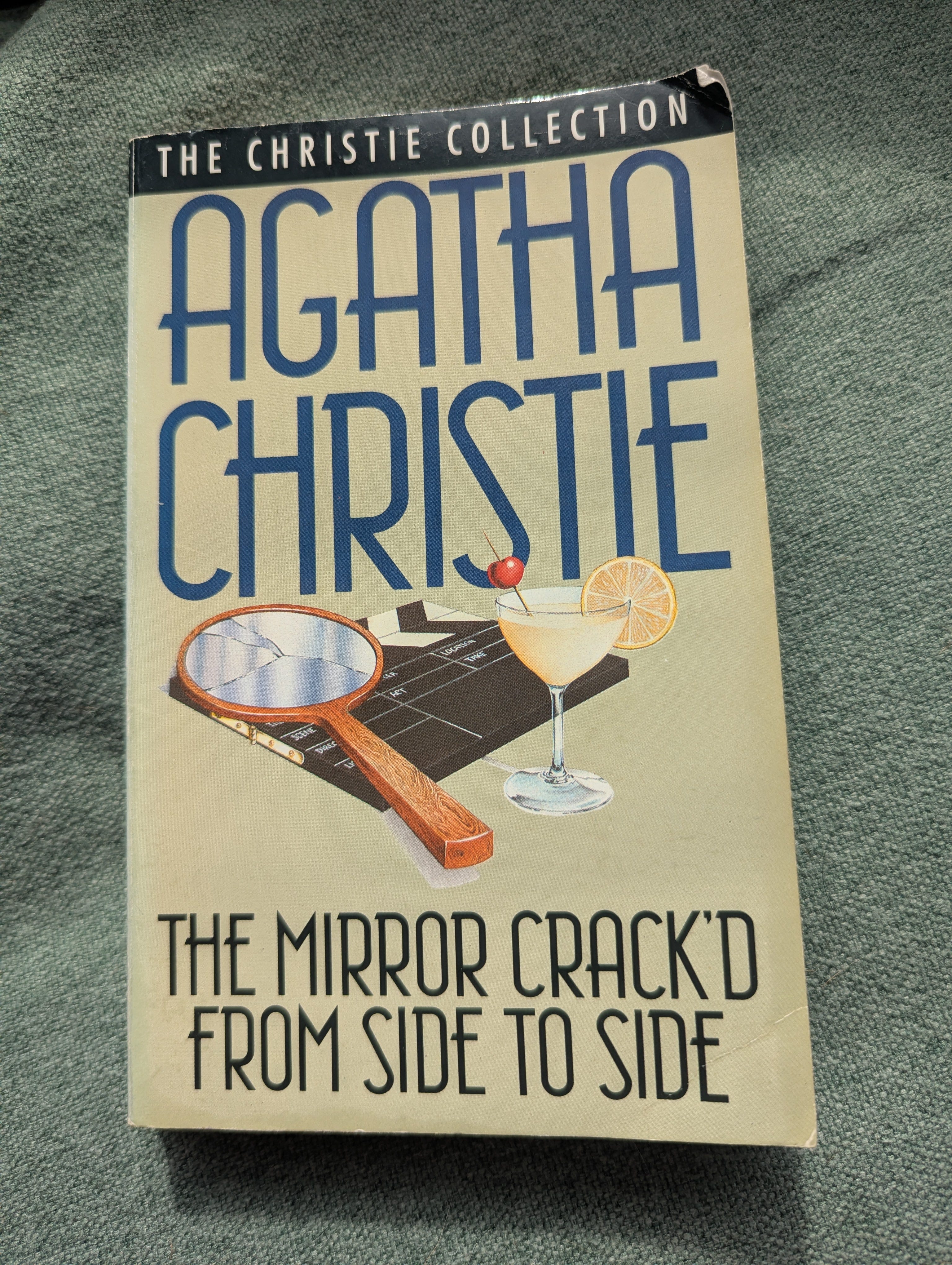
I spotted this classic Miss Marple tale on a community bookshelf at my local park and was immediately attracted to the slightly makeshift 1990s book cover. I’m hardwired to love everything from the Queen of Crime, and whilst this book was by no means my favourite, I was struck by something that I believe is in the DNA of all her novels: compelling dialogue that feels natural to the characters.
Much of this cosy murder mystery is told through dialogue, and you learn so much about the characters and their motivations through it. Her speech achieves that elusive thing that many writers work so hard on – you can always tell who is speaking, without being told.
Dialogue is one of my weaker spots as a writer, and I’ll be turning to this book (or really, any other by Agatha Christie) for inspiration the next time I’m feeling stuck.
💬 Let’s connect:
Are you a fan of the Queen of Crime? What’s the most important lesson you’ve taken from her books?
💌 Until next time
Thanks for being here. If this letter resonated with you, feel free to share it with a friend, leave a comment, or hit reply. I’d love to hear how it landed.
Warmly,
Jess
(Writer, reader, imperfect human)