

Notes from a Phone-Free Holiday
Escaping the comparison trap, reclaiming creativity, and finding peace of mind.

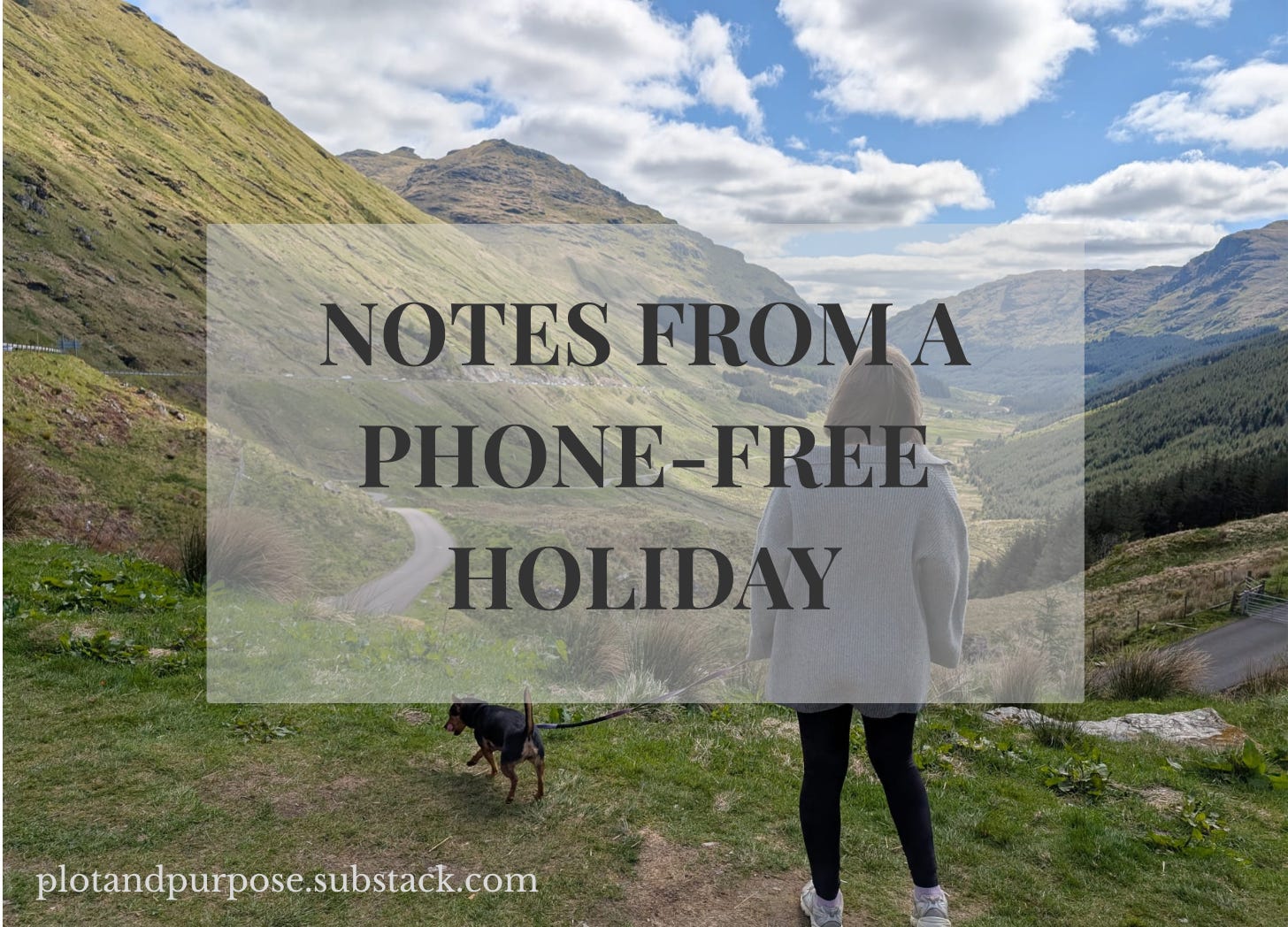
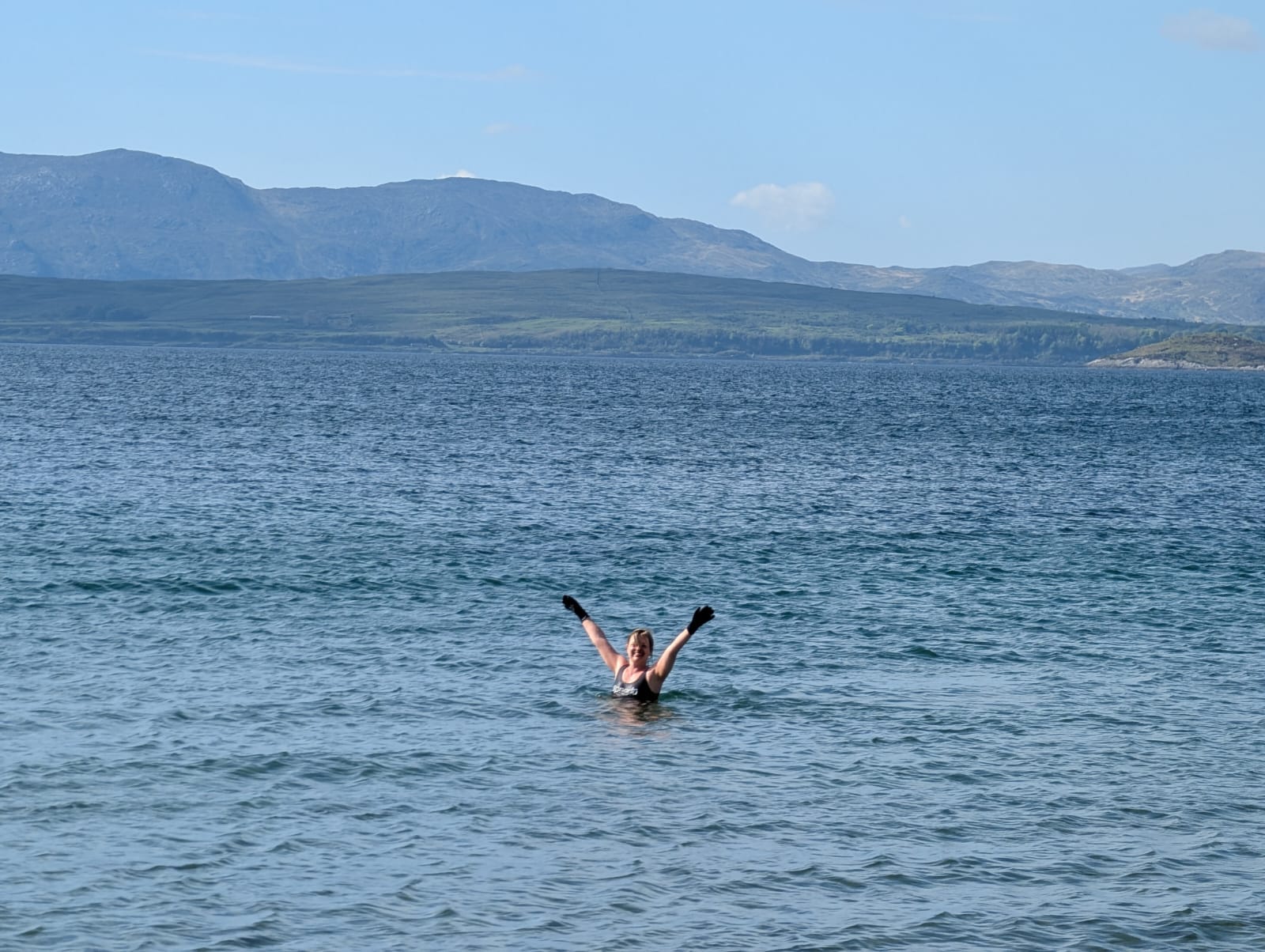
I have just returned from a family holiday (the family being my husband, Sam and our adorable dog, Loki) in Oban, Scotland. We ate fresh seafood every day. Took slow ferries over to beautiful islands covered in undulating hills with rugged little sand-and-pebble beaches scattered every hundred metres. We explored ancient ruins, climbed mountains, and walked in the hallowed footsteps of Daniel Craig and Dame Judi Dench in Skyfall. I swam in the 12-degree Atlantic Ocean and saltwater lochs without wearing a wetsuit. It was invigorating. It was life-affirming. It was restful.
But the most remarkable thing I did on that holiday? I switched off my phone. For a whole week, I gave my mind and nervous system a break from messages, emails, social media notifications, and mindless scrolling. And whilst it didn’t teach me anything I didn’t, ultimately, already know, it did give me the push I needed to make a few much-needed changes.
I decided to take this self-imposed challenge soon after I published my first Substack essay. I’ll admit, I was struggling. I was checking my phone multiple times an hour for notifications. Were people reacting to or commenting on my piece? Did I have any new followers? Progress felt slow-going, and so, the doom-scrolling started. I spent hours looking through notes on my home feed, all of which seemed to have racked up hundreds if not thousands of likes. Filled with an immense, illogical feeling of inadequacy, I found myself in a corner of Substack devoted to how to be successful on Substack. Instead of calmly reading one article, perhaps taking some notes and saving them for future reference, I binge-read article after article whilst drowning in overwhelm.
And then something weird happened.
Feeling like a failure at this thing I had, literally, only just started doing, I turned back to an old-familiar toxic habit that I had long given up: doom-scrolling the IVF and infertility stories of strangers and comparing them to my own.
It hit me how far down the rabbit hole I had fallen when Sam came downstairs one morning to find me on the sofa, hunched over my phone with bleary eyes. He asked what the matter was. I responded: “What if IVF never works for us?”
“IVF… again? How did that happen?”
How, indeed.
While his response was slightly naïve — IVF was never not there — I knew what he meant. IVF hadn’t gone away, but it was no longer the first thing I thought about in the morning and the last thing I thought about before I fell asleep. I no longer spent hours every day playing different scenarios in my head and worrying that we would never be parents. When he came downstairs that morning, it must have felt like he’d entered a time machine and exited into a close but also very distant time.
Obsessing over the status of my baby Substack had become the gateway drug for my original drug of choice: obsessing over bringing home a baby.
But lapses are a necessary part of the recovery process, right? So instead of beating myself up, I practiced self-compassion and asked myself what I needed to feel better. I decided that was to take all the pressure off myself to be online or available while we were on holiday. I considered putting blocks on certain apps, but then the thought of switching my phone off entirely, of not even needing to keep it near me, felt so liberating that I knew I needed to try it.
What my experiment taught me
Sometimes, it feels pretty uncomfortable.
Stepping into the kitchen to cook dinner and realising that without my phone, I can’t listen to one of my favourite podcasts to keep me entertained while I do.
Watching a football match at the pub. Sam gets to go to the bar, and I can’t fill those awkward minutes by responding to messages or scrolling social media.
A worry pops into my head that I’m unable to ‘solve’ (escalate) with the help of Dr Google.
When these moments came up, I learned to lean into the discomfort, noticing what it felt like and what stories I was telling myself about it (for example: It’s pathetic that I need to listen to a podcast whilst I cook, I’m meant to enjoy cooking) releasing them, and then paying attention to the moment. The smells of raw garlic and onion as I chop them, and how those smells change when they soften in oil. The conversations of others in various accents and dialects, all on a sliding scale from stone-cold sober to one-pint-away-from-falling-down-drunk. The changing cadence of my breath as I go from mildly panicked to calm.
Mindfulness can be one of the best practices for mental health, and, luckily, it doubles as a fantastic tool for writers. You never know what you might hear, see, taste, touch, or smell that could make it into a story; things that you miss when you’re distracted by your phone.
My phone is often a source of guilt.
Guilt for not replying to a message quickly enough or contributing to a group chat often enough. Guilt for spending time on it when I should be doing other, more productive or healthy activities. Guilt for not being active enough on social media compared to others.
I only realised the extent of this guilt when it was temporarily lifted, and when it came flooding back the moment I switched my phone back on.
Overall? It was pretty damn liberating, but there were things I missed.
The apps I use to practice meditation, tapping, and intention-setting every morning. Listening to music while getting ready to go out for the evening. Searching for the name of that actor in that film we watched, because I’m sure I’ve seen him in something else.
And yes, if the experiment went on for much longer, I’m sure I would have missed the things I needed a break from in the first place. I didn’t, through this experiment, come to the conclusion that phones are evil, and I should surrender mine and go live off-grid in some completely inaccessible part of the country. But what I did decide was that, for me, excessive phone use is a slippery slope to doom-scrolling comparison, catastrophising, and a general sense of not being or doing enough.
Small changes I’m making
1. Social media and messaging apps are strictly off-limits for the first hour of the day.
I still use my phone during this time for meditation etc, so I’ve installed an app called Digital Detox that sends me a congratulatory message when I manage not to touch the banned apps during that hour. It’s amazing how motivating validation from a robot can be.
2. I’ve set allotted times to check and respond to messages each day.
A half-hour slot mid-morning, after lunch, and after dinner. Unless it’s genuinely urgent, there’s never a need to respond immediately.
3. When I find myself reaching for my phone to fill quiet moments, I do something else instead.
I pay attention to my senses, meditate, do some breathwork, or even read for five minutes.
It’s early days, but I can already feel the difference. These boundaries are helping me to stay in my lane, focus on my own experiences and goals, and lean into joy instead of overwhelm.
Your turn
If you’ve ever felt the weight of comparison, the guilt of unread messages, or the itch to check your phone the moment silence settles, maybe this is your sign to try a pause of your own.
You don’t have to go off-grid or switch off for a week. But you can start small. An hour in the morning. A quiet moment filled with breath instead of a scroll. A walk without your phone in your pocket.
Try one of the practices I’ve shared, or create your own boundaries. You might be surprised by what you notice, both around you and within you.
I’d love to hear what you discover.
Really thought provoking! I often find having a set time to reply to messages works really well for me too